One of the most common misconceptions we encounter is that receiving a letter of demand means you've been sued. It doesn't. Although both documents relate to legal disputes, they serve very different purposes and require different responses.
What is a Letter of Demand?
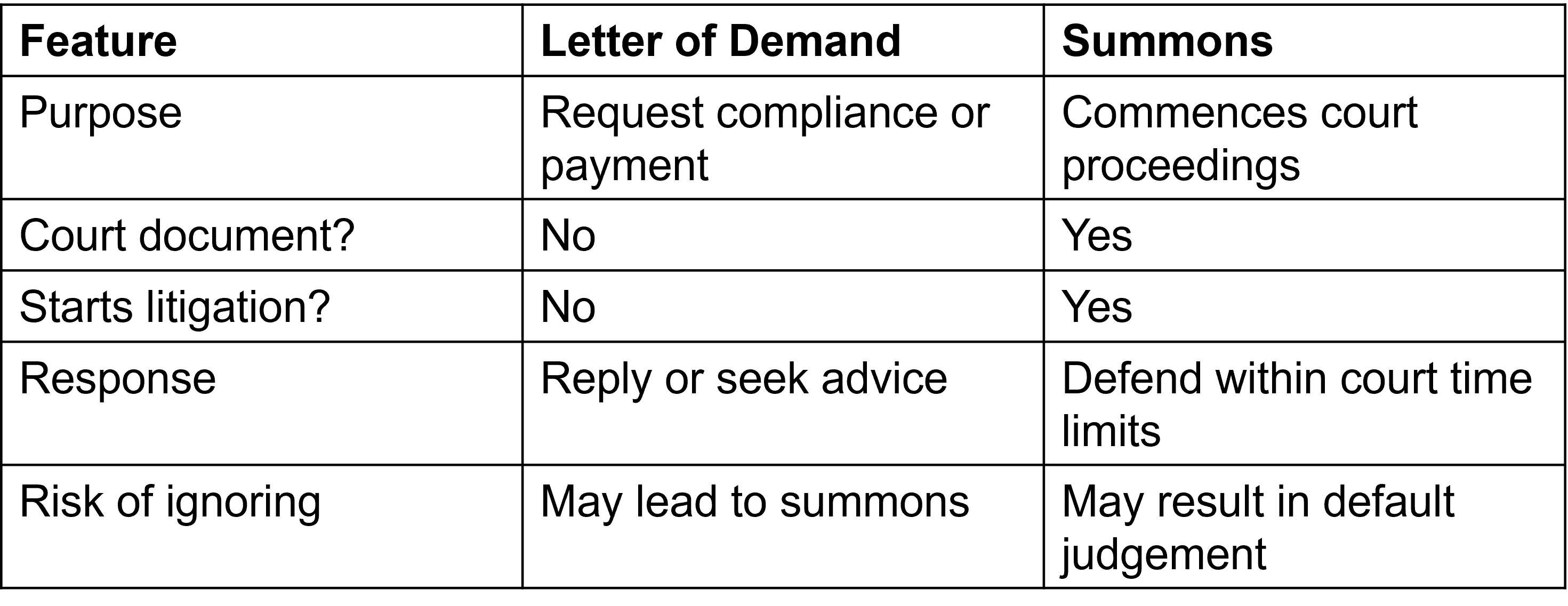
A letter of demand is a formal written request requiring a person or business to fulfil a legal obligation, such as paying a debt, complying with a contract or remedying a breach. It is often the final opportunity to resolve a dispute before litigation is commenced.
What is a Summons?
A summons is a formal court document issued to commence legal proceedings. Once a summons has been served, court rules apply and strict time periods exist within which the recipient must indicate an intention to defend the matter or risk judgment being granted against them.
The Key Differences
A letter of demand is not a court document and is intended to encourage settlement. A summons is issued through the court and officially starts litigation. Ignoring a letter of demand may lead to a summons. Ignoring a summons can have far more serious consequences, including default judgment.
What Should You Do?
If you receive a letter of demand, read it carefully, gather your documents and seek legal advice before responding. If you receive a summons, act immediately. Do not ignore it. Obtain legal advice as soon as possible to ensure that the necessary court deadlines are met.
Can Matters Still Be Settled?
Yes. Receiving a summons does not mean settlement is no longer possible. Many disputes are resolved after litigation has commenced through negotiation or mediation, often saving both parties the time and expense of a trial.
Final Thoughts
Understanding the difference between a letter of demand and a summons allows you to make informed decisions at an early stage. Obtaining legal advice promptly often provides more options, better outcomes and lower costs than waiting until a dispute has escalated.